
Unwritten Literature of Hawaii: The Sacred Songs of the Hula
50 chapters English Public domain
About this book
Emerson's classic study of the Hula is a gold-mine of information for explorers of Hawaiian language, music, dance and culture. He gives the full annotated Hawaiian text of the songs, along with a free English translation.
As in many other traditional cultures, Hawaiian art, dance, music and poetry were highly integrated into every aspect of life, to a degree far beyond that of industrial society. The poetry at the core of the Hula is extremely sophisticated. Typically a Hula song has several dimensions: mythological aspects, cultural implications, an ecological setting, and in many cases, (although Emerson is reluctant to acknowledge this) frank erotic imagery. The extensive footnotes and background information allow us an unprecedented look into these deeper layers. While Emerson's translations are not great poetry, they do serve as a literal English guide to the amazing Hawaiian lyrics.
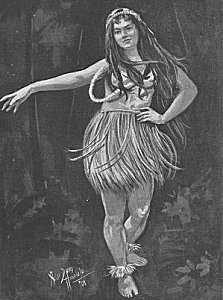
While Emerson does not describe the Hula dance per se as much as one would like, he does provide very detailed background information on the cultural setting in which the Hula was performed, including ritual procedures of the Hula schools, or halau. One other weak point is that the illustrations are primarily sketches of plants mentioned in the songs, musical instruments and so on; only two of them portray Hula dancers (one of which is fully clothed!). The book notably includes musical transcriptions of a number of songs, including the Hawaiian anthem, Hawai'i Ponoi.
This book is a must-read for anyone who wants to acquire a deep understanding of traditional Hawaiian culture.
Table of contents
50 chapters
01 Start Reading 02 Page Index 03 Hawai'i Ponoi 04 Prefatory Note 05 Contents 06 Illustrations and Musical Pieces 07 Introduction 08 I.--The Hula 09 II.--The Halau; the Kuahu--Their Decoration and Consecration 10 III.--The Gods of the Hula 11 IV.--Support and Organization of the Hula 12 V.--Ceremonies of Graduation; Début of a Hula Dancer 13 VI.--The Password--The Song of Admission 14 VII.--Worship at the Altar of the Halau 15 VIII.--Costume of the Hula Dancer 16 IX.--The Hula Ala’a-Papa 17 X.--The Hula Pa-ípu, Or Kuólo 18 XI.--The Hula Ki’i 19 XII.--The Hula Pahu 20 XIII.--The Hula Úli-ulí 21 XIV.--The Hula Puíli 22 XV.--The Hula Ka-laau 23 XVI.--The Hula Íli-íli 24 XVII.--The Hula Ká-éke-éke 25 XVIII. An Intermission
Audiobook
Listen to this edition
Audiobooks are coming soon
Narrated editions will appear here when they are ready to listen.
Membership
Support the archive
$10 / month
Helps fund new texts & growth
Unlimited highlights & annotations
Unlimited bookmarks
Ad free reading experience
Early access to new features
Early access to quality TTS Audiobooks
Priority support & feature requests
4,000 Points monthly for Search usage
Access to point system rewards and value
Cancel anytime. Helps us pay the bills.
Discussion
Community conversation
Discussions are coming soon
Join conversations around this text and its interpretations.
Unwritten Literature of Hawaii: The Sacred Songs of the Hula
50 chapters English Public domain
About this book
Emerson's classic study of the Hula is a gold-mine of information for explorers of Hawaiian language, music, dance and culture. He gives the full annotated Hawaiian text of the songs, along with a free English translation.
As in many other traditional cultures, Hawaiian art, dance, music and poetry were highly integrated into every aspect of life, to a degree far beyond that of industrial society. The poetry at the core of the Hula is extremely sophisticated. Typically a Hula song has several dimensions: mythological aspects, cultural implications, an ecological setting, and in many cases, (although Emerson is reluctant to acknowledge this) frank erotic imagery. The extensive footnotes and background information allow us an unprecedented look into these deeper layers. While Emerson's translations are not great poetry, they do serve as a literal English guide to the amazing Hawaiian lyrics.
While Emerson does not describe the Hula dance per se as much as one would like, he does provide very detailed background information on the cultural setting in which the Hula was performed, including ritual procedures of the Hula schools, or halau. One other weak point is that the illustrations are primarily sketches of plants mentioned in the songs, musical instruments and so on; only two of them portray Hula dancers (one of which is fully clothed!). The book notably includes musical transcriptions of a number of songs, including the Hawaiian anthem, Hawai'i Ponoi.
This book is a must-read for anyone who wants to acquire a deep understanding of traditional Hawaiian culture.
Table of contents
50 chapters
01 Start Reading 02 Page Index 03 Hawai'i Ponoi 04 Prefatory Note 05 Contents 06 Illustrations and Musical Pieces 07 Introduction 08 I.--The Hula 09 II.--The Halau; the Kuahu--Their Decoration and Consecration 10 III.--The Gods of the Hula 11 IV.--Support and Organization of the Hula 12 V.--Ceremonies of Graduation; Début of a Hula Dancer 13 VI.--The Password--The Song of Admission 14 VII.--Worship at the Altar of the Halau 15 VIII.--Costume of the Hula Dancer 16 IX.--The Hula Ala’a-Papa 17 X.--The Hula Pa-ípu, Or Kuólo 18 XI.--The Hula Ki’i 19 XII.--The Hula Pahu 20 XIII.--The Hula Úli-ulí 21 XIV.--The Hula Puíli 22 XV.--The Hula Ka-laau 23 XVI.--The Hula Íli-íli 24 XVII.--The Hula Ká-éke-éke 25 XVIII. An Intermission
Audiobook
Listen to this edition
Audiobooks are coming soon
Narrated editions will appear here when they are ready to listen.
Membership
Support the archive
$10 / month
Helps fund new texts & growth
Unlimited highlights & annotations
Unlimited bookmarks
Ad free reading experience
Early access to new features
Early access to quality TTS Audiobooks
Priority support & feature requests
4,000 Points monthly for Search usage
Access to point system rewards and value
Cancel anytime. Helps us pay the bills.
Discussion
Community conversation
Discussions are coming soon
Join conversations around this text and its interpretations.

The archive, offline Own the Wisdom of the Ages Every text in the library on a single USB drive. Read offline, cite freely, keep forever. No subscription required.
Get the drive $127.00
Unwritten Literature of Hawaii: The Sacred Songs of the Hula
50 chapters English Public domain
About this book
Emerson's classic study of the Hula is a gold-mine of information for explorers of Hawaiian language, music, dance and culture. He gives the full annotated Hawaiian text of the songs, along with a free English translation.
As in many other traditional cultures, Hawaiian art, dance, music and poetry were highly integrated into every aspect of life, to a degree far beyond that of industrial society. The poetry at the core of the Hula is extremely sophisticated. Typically a Hula song has several dimensions: mythological aspects, cultural implications, an ecological setting, and in many cases, (although Emerson is reluctant to acknowledge this) frank erotic imagery. The extensive footnotes and background information allow us an unprecedented look into these deeper layers. While Emerson's translations are not great poetry, they do serve as a literal English guide to the amazing Hawaiian lyrics.
While Emerson does not describe the Hula dance per se as much as one would like, he does provide very detailed background information on the cultural setting in which the Hula was performed, including ritual procedures of the Hula schools, or halau. One other weak point is that the illustrations are primarily sketches of plants mentioned in the songs, musical instruments and so on; only two of them portray Hula dancers (one of which is fully clothed!). The book notably includes musical transcriptions of a number of songs, including the Hawaiian anthem, Hawai'i Ponoi.
This book is a must-read for anyone who wants to acquire a deep understanding of traditional Hawaiian culture.
Table of contents
50 chapters
01 Start Reading 02 Page Index 03 Hawai'i Ponoi 04 Prefatory Note 05 Contents 06 Illustrations and Musical Pieces 07 Introduction 08 I.--The Hula 09 II.--The Halau; the Kuahu--Their Decoration and Consecration 10 III.--The Gods of the Hula 11 IV.--Support and Organization of the Hula 12 V.--Ceremonies of Graduation; Début of a Hula Dancer 13 VI.--The Password--The Song of Admission 14 VII.--Worship at the Altar of the Halau 15 VIII.--Costume of the Hula Dancer 16 IX.--The Hula Ala’a-Papa 17 X.--The Hula Pa-ípu, Or Kuólo 18 XI.--The Hula Ki’i 19 XII.--The Hula Pahu 20 XIII.--The Hula Úli-ulí 21 XIV.--The Hula Puíli 22 XV.--The Hula Ka-laau 23 XVI.--The Hula Íli-íli 24 XVII.--The Hula Ká-éke-éke 25 XVIII. An Intermission
Audiobook
Listen to this edition
Audiobooks are coming soon
Narrated editions will appear here when they are ready to listen.
Membership
Support the archive
$10 / month
Helps fund new texts & growth
Unlimited highlights & annotations
Unlimited bookmarks
Ad free reading experience
Early access to new features
Early access to quality TTS Audiobooks
Priority support & feature requests
4,000 Points monthly for Search usage
Access to point system rewards and value
Cancel anytime. Helps us pay the bills.
Discussion
Community conversation
Discussions are coming soon
Join conversations around this text and its interpretations.