
A Journey to the Earth's Interior
31 chapters English Public domain
About this book
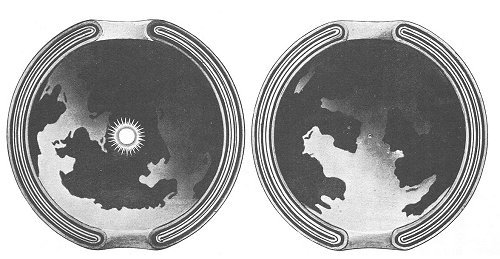
Gardner's book is in some ways superior to other books in this genre. He attempts to come up with a scientific hypothesis to explain the formation of hollow planets, instead of divine fiat or no explanation at all. He is also a lot more readable. One of the most enjoyable parts of this book is Gardner's fantasy account of a journey into the interior of the hollow earth, which, while not up to the standards of Jules Verne, seems almost plausible if you can suspend your disbelief temporarily.
Naturally, a great deal of the book consists of narratives of arctic explorers (covering some of same material as Reed). The book marshals a great deal of anomalous polar evidence, such as attested warm regions near the poles, red dust, strange auroras and so on. Last but not least are those poor flash-frozen Siberian mammoths, who seem to crop up with such regularity in the crank literature,--probably because traditional scientific explanations of their demise always sound so fishy when quoted out of context.
There is a long section at the end where he deals with the response to the first edition of his book, including an opponent who raises a theory of a prehistoric 90 degree polar shift to account for some of the same evidence! By contrast, a hollow earth would definitely be more plausible.
Although Gardner doesn't attack the scientific method or basic physical laws, as other alternative earth theorists do, perhaps he should have. According to traditional physics, inside of a hollow earth-sized sphere there should be zero gravity; and centrifugal force caused by the earth's rotation would be insufficient to keep things inside the hollow earth from floating away, either. Working out the math of a star small enough to fit inside the earth, not too hot to fry the interior surface, and not too dense to turn into a black hole is 'left as an exercise.' The charming idea of denizens of the hollow earth going about their business lit by a never-setting mini-sun is simply a fantasy.
Table of contents
31 chapters
01 Start Reading 02 Contents 03 Illustrations 04 Preface 05 Chapter I. Introductory 06 Chapter II. The Nebula and its Evolution 07 Chapter III. Mars 08 Chapter IV. Early Polar Exploration 09 Chapter V. Further Arctic Exploration 10 Chapter VI. Greely's Explorations 11 Chapter VII. Nordenskiold's Voyages 12 Chapter VII. With Nansen in the North 13 Chapter IX. Was the North Pole Discovered? 14 Chapter X. Two Congressional Opinions on Peary and Cook 15 Chapter XI. The Mammoth 16 Chapter XII. The Life of the Arctic 17 Chapter XIII. Other Interesting Animals of the Interior 18 Chapter XIV. The Aurora 19 Chapter XV. The Eskimo 20 Chapter XVI. Evidence in the Antarctic 21 Chapter XVII. The Journey to the Earth's Interior 22 Chapter XVIII. The Formation of the Earth 23 Chapter XIX. How Our Theory Differs From That of Symmes 24 Chapter XX. The Moon And Our Theory 25 Chapter XXI. A Note on Gravitation
Audiobook
Listen to this edition
Audiobooks are coming soon
Narrated editions will appear here when they are ready to listen.
Membership
Support the archive
$10 / month
Helps fund new texts & growth
Unlimited highlights & annotations
Unlimited bookmarks
Ad free reading experience
Early access to new features
Early access to quality TTS Audiobooks
Priority support & feature requests
4,000 Points monthly for Search usage
Access to point system rewards and value
Cancel anytime. Helps us pay the bills.
Discussion
Community conversation
Discussions are coming soon
Join conversations around this text and its interpretations.
A Journey to the Earth's Interior
31 chapters English Public domain
About this book
Gardner's book is in some ways superior to other books in this genre. He attempts to come up with a scientific hypothesis to explain the formation of hollow planets, instead of divine fiat or no explanation at all. He is also a lot more readable. One of the most enjoyable parts of this book is Gardner's fantasy account of a journey into the interior of the hollow earth, which, while not up to the standards of Jules Verne, seems almost plausible if you can suspend your disbelief temporarily.
Naturally, a great deal of the book consists of narratives of arctic explorers (covering some of same material as Reed). The book marshals a great deal of anomalous polar evidence, such as attested warm regions near the poles, red dust, strange auroras and so on. Last but not least are those poor flash-frozen Siberian mammoths, who seem to crop up with such regularity in the crank literature,--probably because traditional scientific explanations of their demise always sound so fishy when quoted out of context.
There is a long section at the end where he deals with the response to the first edition of his book, including an opponent who raises a theory of a prehistoric 90 degree polar shift to account for some of the same evidence! By contrast, a hollow earth would definitely be more plausible.
Although Gardner doesn't attack the scientific method or basic physical laws, as other alternative earth theorists do, perhaps he should have. According to traditional physics, inside of a hollow earth-sized sphere there should be zero gravity; and centrifugal force caused by the earth's rotation would be insufficient to keep things inside the hollow earth from floating away, either. Working out the math of a star small enough to fit inside the earth, not too hot to fry the interior surface, and not too dense to turn into a black hole is 'left as an exercise.' The charming idea of denizens of the hollow earth going about their business lit by a never-setting mini-sun is simply a fantasy.
Table of contents
31 chapters
01 Start Reading 02 Contents 03 Illustrations 04 Preface 05 Chapter I. Introductory 06 Chapter II. The Nebula and its Evolution 07 Chapter III. Mars 08 Chapter IV. Early Polar Exploration 09 Chapter V. Further Arctic Exploration 10 Chapter VI. Greely's Explorations 11 Chapter VII. Nordenskiold's Voyages 12 Chapter VII. With Nansen in the North 13 Chapter IX. Was the North Pole Discovered? 14 Chapter X. Two Congressional Opinions on Peary and Cook 15 Chapter XI. The Mammoth 16 Chapter XII. The Life of the Arctic 17 Chapter XIII. Other Interesting Animals of the Interior 18 Chapter XIV. The Aurora 19 Chapter XV. The Eskimo 20 Chapter XVI. Evidence in the Antarctic 21 Chapter XVII. The Journey to the Earth's Interior 22 Chapter XVIII. The Formation of the Earth 23 Chapter XIX. How Our Theory Differs From That of Symmes 24 Chapter XX. The Moon And Our Theory 25 Chapter XXI. A Note on Gravitation
Audiobook
Listen to this edition
Audiobooks are coming soon
Narrated editions will appear here when they are ready to listen.
Membership
Support the archive
$10 / month
Helps fund new texts & growth
Unlimited highlights & annotations
Unlimited bookmarks
Ad free reading experience
Early access to new features
Early access to quality TTS Audiobooks
Priority support & feature requests
4,000 Points monthly for Search usage
Access to point system rewards and value
Cancel anytime. Helps us pay the bills.
Discussion
Community conversation
Discussions are coming soon
Join conversations around this text and its interpretations.

The archive, offline Own the Wisdom of the Ages Every text in the library on a single USB drive. Read offline, cite freely, keep forever. No subscription required.
Get the drive $127.00
A Journey to the Earth's Interior
31 chapters English Public domain
About this book
Gardner's book is in some ways superior to other books in this genre. He attempts to come up with a scientific hypothesis to explain the formation of hollow planets, instead of divine fiat or no explanation at all. He is also a lot more readable. One of the most enjoyable parts of this book is Gardner's fantasy account of a journey into the interior of the hollow earth, which, while not up to the standards of Jules Verne, seems almost plausible if you can suspend your disbelief temporarily.
Naturally, a great deal of the book consists of narratives of arctic explorers (covering some of same material as Reed). The book marshals a great deal of anomalous polar evidence, such as attested warm regions near the poles, red dust, strange auroras and so on. Last but not least are those poor flash-frozen Siberian mammoths, who seem to crop up with such regularity in the crank literature,--probably because traditional scientific explanations of their demise always sound so fishy when quoted out of context.
There is a long section at the end where he deals with the response to the first edition of his book, including an opponent who raises a theory of a prehistoric 90 degree polar shift to account for some of the same evidence! By contrast, a hollow earth would definitely be more plausible.
Although Gardner doesn't attack the scientific method or basic physical laws, as other alternative earth theorists do, perhaps he should have. According to traditional physics, inside of a hollow earth-sized sphere there should be zero gravity; and centrifugal force caused by the earth's rotation would be insufficient to keep things inside the hollow earth from floating away, either. Working out the math of a star small enough to fit inside the earth, not too hot to fry the interior surface, and not too dense to turn into a black hole is 'left as an exercise.' The charming idea of denizens of the hollow earth going about their business lit by a never-setting mini-sun is simply a fantasy.
Table of contents
31 chapters
01 Start Reading 02 Contents 03 Illustrations 04 Preface 05 Chapter I. Introductory 06 Chapter II. The Nebula and its Evolution 07 Chapter III. Mars 08 Chapter IV. Early Polar Exploration 09 Chapter V. Further Arctic Exploration 10 Chapter VI. Greely's Explorations 11 Chapter VII. Nordenskiold's Voyages 12 Chapter VII. With Nansen in the North 13 Chapter IX. Was the North Pole Discovered? 14 Chapter X. Two Congressional Opinions on Peary and Cook 15 Chapter XI. The Mammoth 16 Chapter XII. The Life of the Arctic 17 Chapter XIII. Other Interesting Animals of the Interior 18 Chapter XIV. The Aurora 19 Chapter XV. The Eskimo 20 Chapter XVI. Evidence in the Antarctic 21 Chapter XVII. The Journey to the Earth's Interior 22 Chapter XVIII. The Formation of the Earth 23 Chapter XIX. How Our Theory Differs From That of Symmes 24 Chapter XX. The Moon And Our Theory 25 Chapter XXI. A Note on Gravitation
Audiobook
Listen to this edition
Audiobooks are coming soon
Narrated editions will appear here when they are ready to listen.
Membership
Support the archive
$10 / month
Helps fund new texts & growth
Unlimited highlights & annotations
Unlimited bookmarks
Ad free reading experience
Early access to new features
Early access to quality TTS Audiobooks
Priority support & feature requests
4,000 Points monthly for Search usage
Access to point system rewards and value
Cancel anytime. Helps us pay the bills.
Discussion
Community conversation
Discussions are coming soon
Join conversations around this text and its interpretations.